Casebook № 01 · Consumer brands, India · 2026 · 17 pages
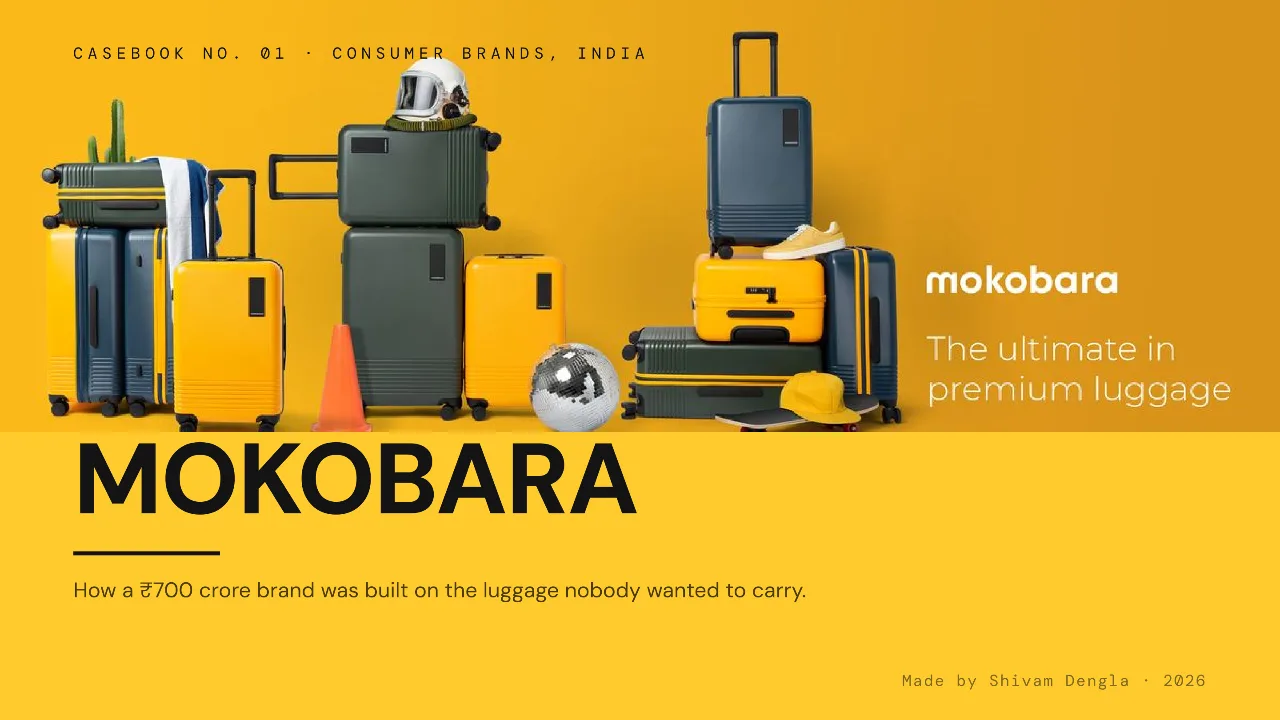
Mokobara
How a ₹700 crore brand was built on the luggage nobody wanted to carry.
₹12 Cr → ₹230 Cr
Revenue, FY22 to FY25 — the four-year climb behind a ₹700 crore valuation.
The thesis
In 2018 the Indian luggage market was ₹20,000 crore, three brands and zero personality: cheap bags that break in a year, or luxury bags that cost more than the flight. The ₹8–12K tier was empty until Mokobara filled it — for the buyer who wears Onitsuka Tiger and refuses to be seen with a mall trolley.
Inside the deck
- 01
No MVP — only the product they'd buy themselves
German Makrolon shell reinforced from the inside, silent Hinomoto wheels chosen after visiting 25 factories in China, YKK zippers — and the signature yellow lining every early user said would get dirty. They ignored the feedback. It became the icon.
- 02
Same story, same bag, again and again
No A/B testing. One bag per campaign, one colour, repeated until you see it in real life and think “I know that bag.” Half of all commissioned influencer content never goes live — wrong vibe, killed. A fashion brand's discipline applied to luggage.
- 03
Three collabs that each changed the category
IndiGo: buy the bag, get 2 kg of extra baggage allowance on every flight — India's largest airline solving the №1 traveller pain point. Blinkit: only backpacks, never luggage, as top-of-funnel for the ₹10K suitcase later. Diljit: the bags went on world tour.
- 04
Inside a ₹9,000 sale
Manufacturing ₹3,000, duties and logistics ₹1,350, a 52 % gross margin — then ₹1,800 of blended marketing per order. At 20 % of revenue on ads they're spending like a brand in land-grab mode; mature brands run 8–12 %. The gap is the investment.
“If you're wearing Onitsuka Tiger, you cannot be seen traveling with a Safari luggage.” The founding instinct, in one sentence.
Reading this and hiring for product? Email me — say what you disagreed with.